Key takeaways
- Choose plants rated for USDA zone 7 and heat tolerance.
- Native perennials and grasses are tough and good for pollinators.
- Shade needs its own plant list.
- Match mature size to space to avoid constant pruning.
Trees and shrubs
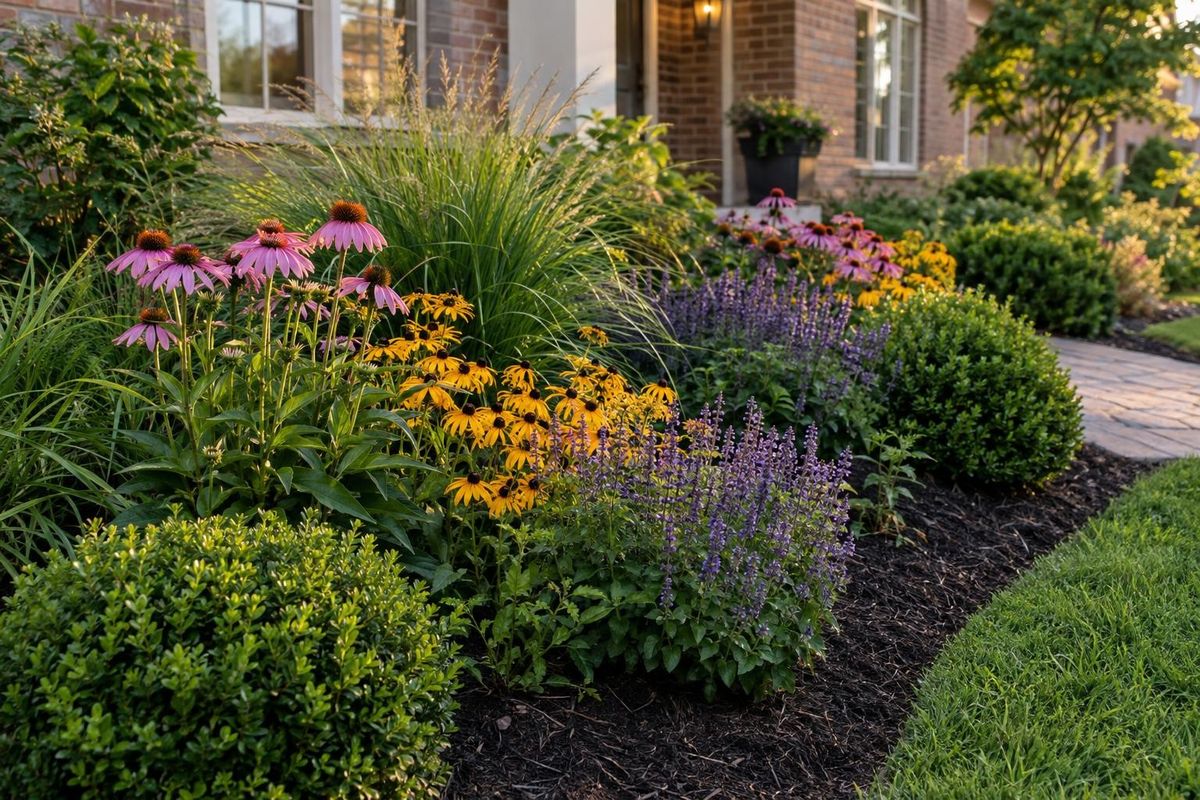
Oaks, red maples, dogwood, redbud, crape myrtle and southern magnolia do well here. For shrubs, consider boxwood, holly, viburnum, oakleaf hydrangea and abelia.
Check mature size before planting and keep trees away from structures and utilities.
Perennials and grasses
Purple coneflower, black-eyed Susan, salvia, daylily, sedum and Russian sage take heat and clay well. Ornamental grasses such as little bluestem, switchgrass and muhly add movement and winter interest.
Many of these plants support pollinators and birds.
Shade plants
Hostas, ferns, hellebores, coral bells and Solomon's seal fill shaded beds under trees. Plant them in beds with amended soil and mulch.
Lawn grass struggles in deep shade, so beds are often a better choice.
Planting tips
Fall is an excellent planting season, with warm soil and cool air. Amend heavy clay with compost, plant at the right depth and water through the first season.
A planting plan keeps a mix of sizes and bloom times in balance.
Quick answers
What hardiness zone is Middle Tennessee?
Most of the region is USDA zone 7a to 7b.
Are there deer-resistant choices?
Yes. Boxwood, salvia, ornamental grasses and many aromatic plants are less appealing to deer.