Key takeaways
- Fall is the best time to aerate and overseed tall fescue.
- Warm-season lawns are aerated in late spring to early summer, not in fall.
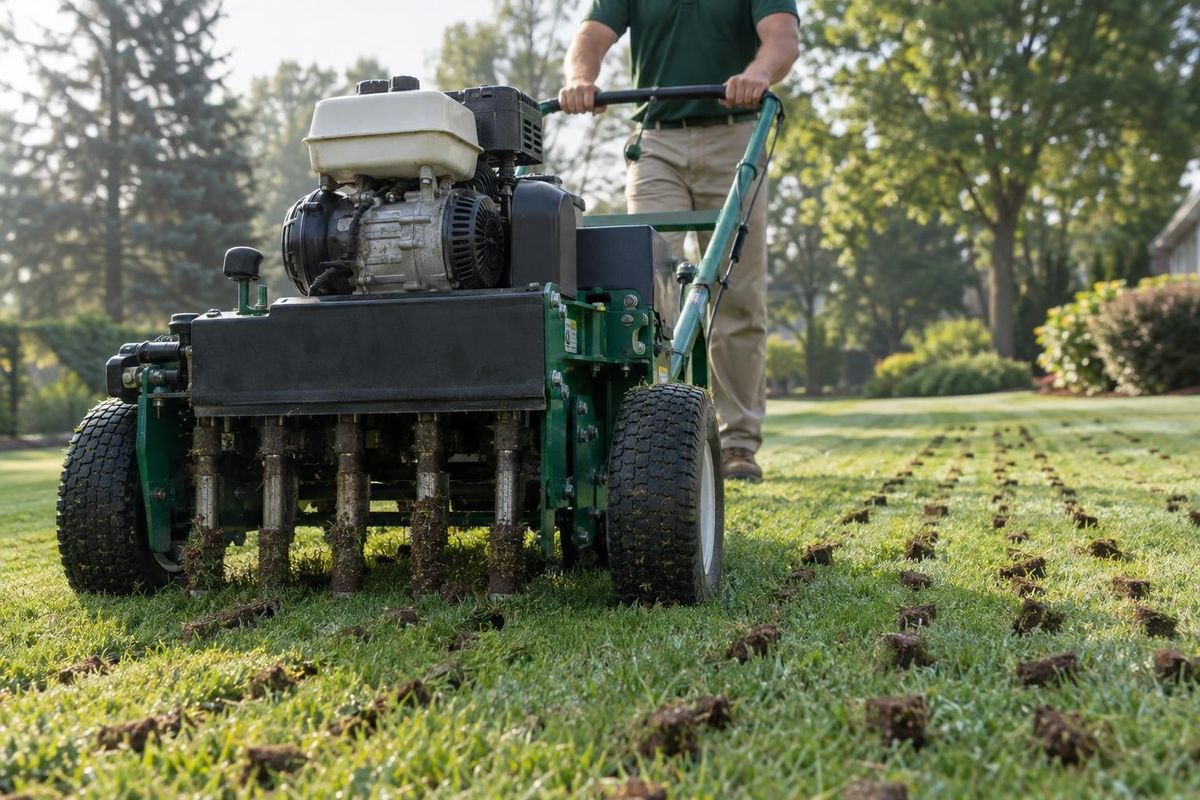
- Aerate first, then overseed so seed meets the soil.
- Keep new seed evenly moist for several weeks.
Why aeration matters here
Much of Middle Tennessee has heavy clay that compacts under feet and mowers. Compacted soil sheds water and starves roots, so grass thins even when you feed it properly.
Core aeration pulls plugs of soil out, opening channels for air, water and nutrients.
Overseeding fescue
Tall fescue does not spread, so it needs new seed every year or two to stay thick. Seed in early fall, when soil is warm for germination and cool nights reduce stress.
Slit-seeding or seeding after aeration puts seed in contact with soil, which improves germination.
Warm-season lawns
Bermuda and zoysia are aerated from late spring into early summer, when they are actively growing and can recover quickly. Seeding bermuda is a spring and summer job, not a fall one.
Fall aeration on warm-season lawns can stress them before dormancy.
After the work
Water lightly and often until seed sprouts, then taper off. Mow once seedlings reach three to four inches, and wait on weed killers until after several mowings.
We schedule aeration and overseeding together in Nashville each September and October.
Quick answers
Is it better to aerate or dethatch?
Aeration helps compaction. Dethatching helps when thatch is thick. Many lawns need only aeration.
Can I overseed in spring?
You can, but weeds and heat make fall a better choice for fescue.