Key takeaways
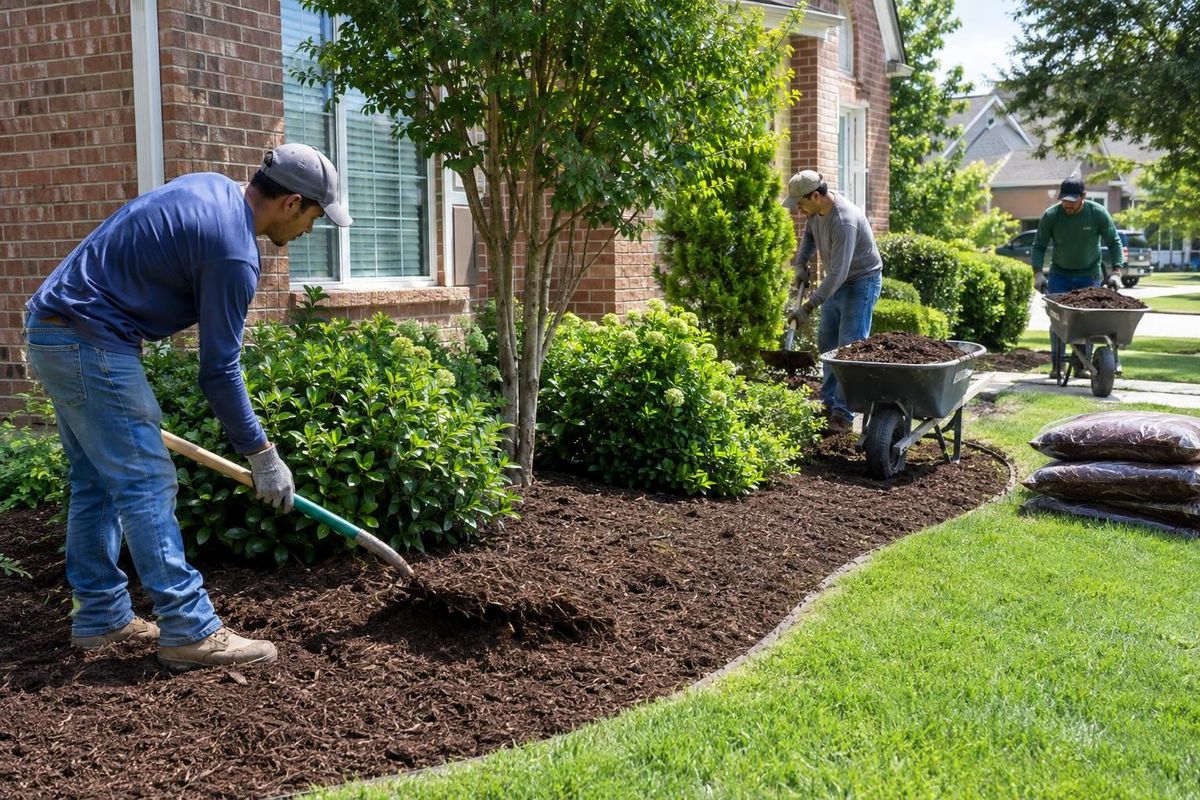
- Spread mulch two to three inches deep, not more.
- Keep mulch off trunks and stems.
- Hardwood, pine bark and pine straw are popular here.
- Refresh when the layer thins or fades.
What mulch does
Mulch holds moisture, blocks weed seeds from sprouting, keeps soil temperature steady and breaks down to feed the soil. It also gives beds a finished look.
It is one of the most valuable and least expensive improvements to a landscape.
Choosing a type
Shredded hardwood knits together and stays put on slopes. Pine bark nuggets last longer and are lighter. Pine straw is natural-looking and good around acid-loving plants. Dyed mulch keeps color longer but can fade.
Avoid rubber and stone mulch near plants that like cool roots.
How to apply it
Clear weeds, edge the bed and spread two to three inches evenly, keeping mulch a couple of inches away from trunks and stems. A deep pile against the trunk, sometimes called a mulch volcano, invites rot and pests.
Top up thin areas rather than adding a new thick layer every year.
When to refresh
Most beds need a top-up each year or two. Spring is popular because it prepares beds for summer, and fall mulching protects roots over winter.
Homes in Nashville often schedule mulching with spring cleanup.
Quick answers
Is it okay to put mulch on top of old mulch?
Yes, if the old layer is thin. Too much buildup can smother roots.
Does mulch attract termites?
Mulch can hide them, but it does not attract them more than other cover. Keep mulch away from siding.